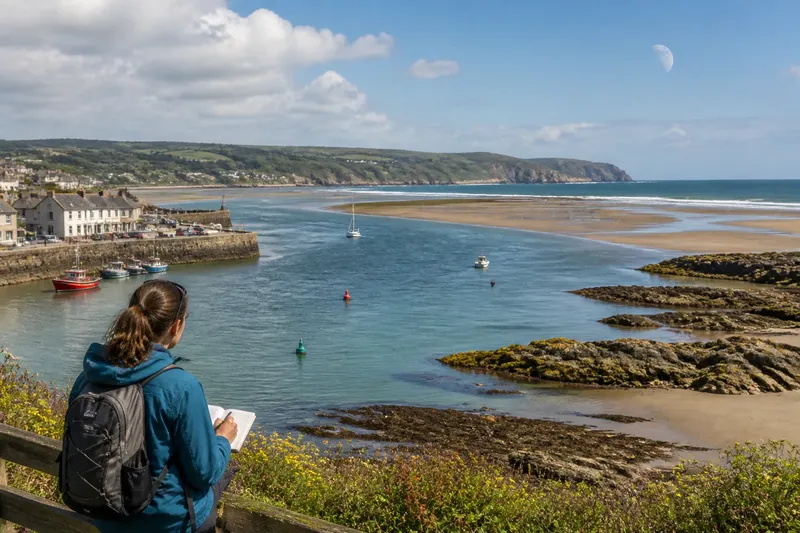
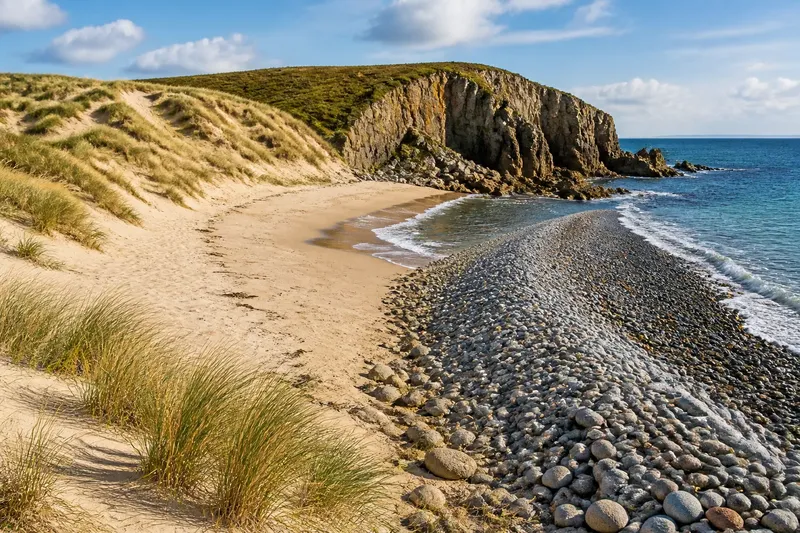
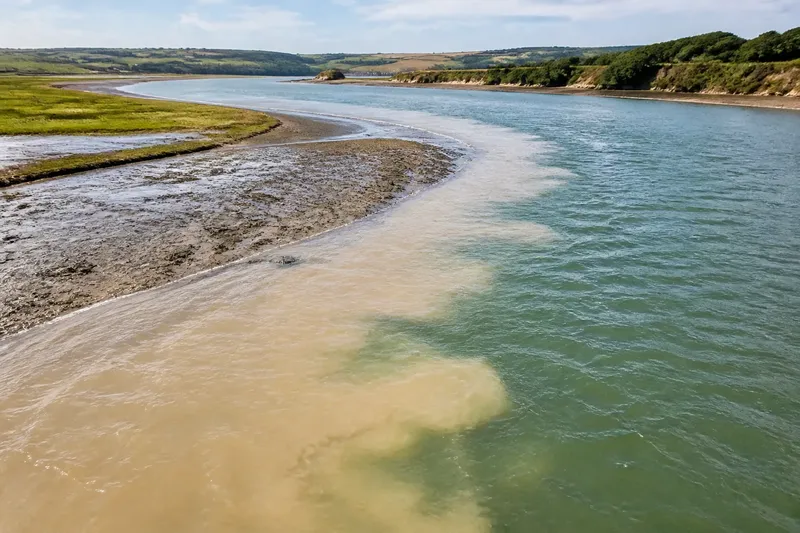
A Slow Look at a Rocky Shore
A slow look at a rocky shore reveals how pools, ledges, and water movement shape intertidal habitat—all from a stable viewpoint that leaves life undisturbed.
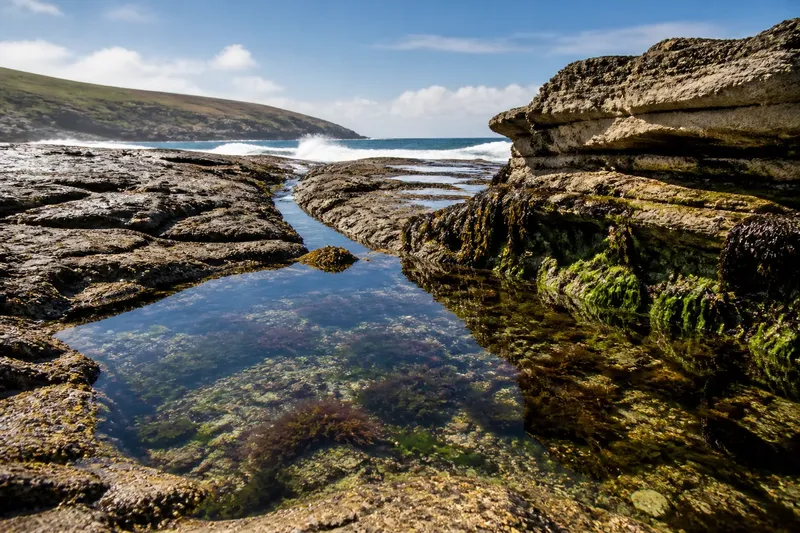
A slow look at a rocky shore reveals how pools, ledges, and moving water shape intertidal habitat. Choose a stable viewpoint, then watch how the shore’s structure shelters or exposes the life around it.
Stay on dry, secure ground and let the shore come into focus from there. You can learn a great deal by watching water move through channels, noticing where shade gathers, and comparing the forms of neighboring pools—without stepping into either.
How should you choose a safe place to observe?
Pause where the path meets the shore and survey the whole area before moving. Note the open-water direction, the shape of the rocky platform, and the route back to higher ground. If waves wash over the rocks or the surface looks slick, observe from a sheltered, dry position instead.
Check local tide information and posted access guidance. Do not treat a low water level as an invitation to reach an outer ledge; choose a place with a clear view and an easy retreat. Wear secure shoes, and leave shells, seaweed, stones, and animals where they are.
- If the route back is clear and dry, use it for your return; if it crosses wet ledges, choose a higher viewpoint.
- If waves reach the rock where you planned to stand, watch from sheltered ground; if they do not, still keep a clear retreat route.
- If posted signs restrict access, follow them and observe from the permitted area; if guidance is unclear, ask the site manager rather than guessing.
- If a pool can be seen from stable ground, observe from its rim; if not, skip it rather than stepping across another pool or ledge.
- If your shoes grip the surface securely, proceed only on the planned dry route; if the rock is slick or unstable, stay ashore.
- If you can see a feature without leaning, use a notebook or camera from where you stand; if not, leave it unexamined rather than reaching across it.
A notebook and pencil are enough for recording patterns. A phone camera can help from a stable spot, but there is no need to approach a feature for a closer image.
What do pools and ledges reveal about habitat?
Begin with the shapes of the shore. A broad shelf, raised ridge, crack, or shallow basin changes where water collects and where shadows fall. Trace the boundary between a pool and the surrounding rock: does the edge slope gradually, or break into a step? Is the surface smooth, rough, pale, or dark?
A pool’s position can suggest how it meets the sea. From the rim, notice whether it appears open to moving water or tucked behind a ridge, and whether its surface is still or rippling. Compare visible pools from one safe position. One may look more sheltered or receive more direct light, while another may sit beside a channel that carries water across the rock.
Ledges, cracks, and hollows create small differences in shelter and exposure. Seaweed attached to a shaded crevice, a bare patch beside a crowded one, or a line of wet rock below a dry slab can show how varied the habitat is over a short distance. These visible patterns do not, by themselves, explain what caused them; wave action, shade, and rock shape may all contribute.
Imagine you are standing on a dry platform with a shallow pool beside a ridged ledge. You see the pool’s surface ripple when water passes through a nearby channel, while the ledge remains shaded. You note those two observations without moving closer. The resulting account links water movement and shelter to specific places, while leaving open questions about what else may shape the scene.
How can you watch change without disturbing the shore?
Choose one visible feature and keep your position fixed. Watch a reflection, a patch of seaweed moving in the water, or the boundary between wet and dry rock. If the reflection breaks into ripples, note the change; if the rock’s sheen fades, record that instead. There is no need to follow moving water onto a ledge.
Look for connections between features rather than trying to name every organism. A narrow channel may lead toward a pool; a ridge may block a line of water; a crack may stay shaded while the nearby slab is bright. A simple sketch of these relationships can make the shore’s layout easier to recall than a tight close-up.
Keep hands and feet out of pools. Do not turn over rocks or lift seaweed to inspect what lies beneath; these spaces provide shelter, and replacing a cover may not restore the conditions underneath it.
What do visitors ask about rocky-shore observation?
When is a suitable time to observe a rocky shore?
Choose a time when access is permitted and you can remain on stable ground with a clear route back. A lower water level may expose more rock, but local conditions and posted guidance matter more than reaching a particular feature.
Can I pick up a shell or turn over a rock?
Leave both in place. Animals may shelter beneath rocks or among shells, and replacing an object may not restore the small habitat it covered.
What should I note if I cannot identify an organism?
Describe its visible traits and location, such as a dark, branching patch in a shaded crack. A precise description is useful even when the name is uncertain.
How can I photograph a pool without disturbing its habitat?
Take the image from a stable position, using camera zoom instead of leaning over the water or stepping onto a ledge. Include some surrounding rock so the feature’s setting remains visible.
How should you leave the shore?
Return along the route you chose, then take one last look from safe, dry ground. You might notice pools aligned along a channel or several hollows sheltered by one ridge—patterns that were harder to see when you first arrived.
Take your belongings and notes with you, and leave the rock unmarked. A slow look at a rocky shore can reveal how habitat changes across pools, ledges, and exposed surfaces. On another visit, notice how the same structural features guide water and shelter, while avoiding any claim that a single view explains the whole coast.