Dune, Cliff or Shingle: Reading Three Shoreline Forms
Dune, cliff or shingle shoreline? Learn to read sand, exposed rock, and rounded pebbles by their shape, material, and signs of movement.
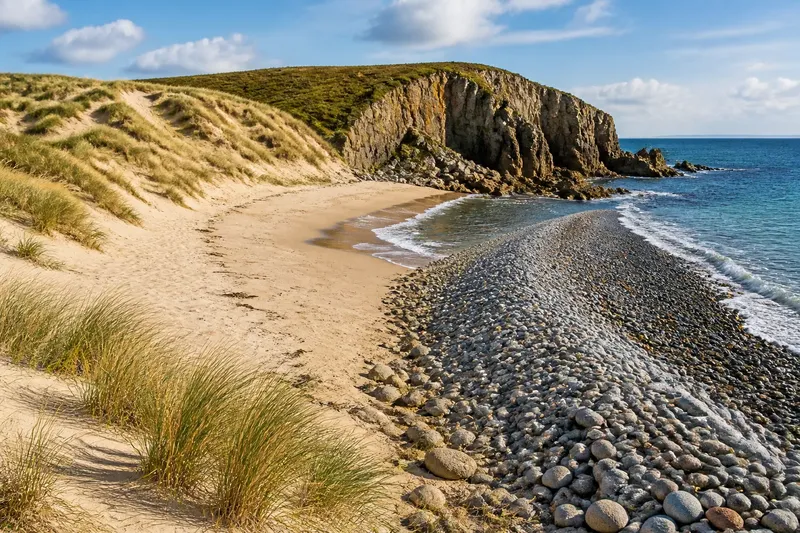
A dune, cliff, or shingle shoreline usually announces itself through its loose material, its profile, and the way the land meets the water. To read these three shoreline forms, look first at what lies underfoot, then scan the slope for signs that wind, waves, or gravity have rearranged it.
What does a dune shoreline reveal?
A dune is a mound or ridge of wind-blown sand, often set back from the water behind a beach. It can look like a fixed landform, but its surface may be shifting grain by grain. A gently sloping beach, dry sand, and a raised sandy ridge make a useful first set of clues.
Look for a landward change in texture. The beach may have a broad, firm strip nearer the water and softer, drier sand farther up. Beyond it, dunes often rise into uneven ridges or rounded mounds. Their shapes vary: a smooth, low crest may sit beside a steep face where sand has slumped.
Plants can be another clue. Grasses such as marram grass catch wind-blown sand around their stems, helping small mounds grow. On a larger dune, plant cover may be patchy, with bare sand exposed on a crest or slope. A line of driftwood or a shallow hollow may mark where wind and water have carried material through the system.
Do not assume every sandy hill beside a beach is a dune. A natural dune is built by moving sand and commonly has a beachward source, while a steep bank may be a different landform or a human-made sand barrier. Look for a transition from beach to ridge and for sand that appears to continue inland, rather than relying on shape alone.
How can you recognize a cliff shoreline?
A cliff is a steep face in rock or compacted earth, often cut or undercut by waves at its base. The face may be nearly vertical, broken into ledges, or softened by weathering. What matters is the contrast between a resistant mass above and a sharp drop toward the shore.
Check the foot of the slope for fallen blocks, fresh-looking scars, or a narrow notch at water level. These features suggest material has detached or been worn away. A wave-cut notch can leave an overhanging lip; a rockfall can leave angular fragments below. Their presence does not tell you exactly when change occurred, only that the face has been altered.
Rock type affects the details. Hard, jointed rock may form blocky faces and angular debris. Softer or layered material may show bands, grooves, or a more rounded slope. In some places, vegetation covers much of the face, so exposed sections at the base or along a path may offer a clearer view of the underlying material.
A steep shoreline is not always a cliff carved directly by the sea. Rain, groundwater, frost, and gravity can also weaken a slope, while waves remove material from its base. Read the whole profile: a sharp drop with exposed rock and debris differs from a high sandy bank, even if both look abrupt from the beach.
Why does shingle look different from sand?
Shingle beaches are made of coarse pebbles, cobbles, or other rounded stones, rather than fine sand. The stones may be mixed in size, color, and rock type. Their rounded edges often reflect repeated movement and abrasion, though a beach’s exact shape depends on the material available and local wave conditions.
Notice how the stones sort across the beach. Larger pieces may gather along an upper ridge, while smaller gravel occupies lower areas. Several ridges can sit one behind another, marking different positions reached by waves. The surface may feel steep and loose underfoot, and the pebbles can shift as water runs between them.
Compare the shoreline’s profile with the material. A shingle beach may rise sharply from the water and then flatten inland, or form a long ridge that separates the sea from a lagoon or low ground. A thin scatter of pebbles over sand does not make the whole shore a shingle beach; look for a substantial, continuous layer.
Say you reach a beach where a low, grassy ridge sits behind a strip of sand, a nearby headland ends in a broken rock face, and the next cove has a steep band of smooth stones. You might identify the first as dunes, the second as a cliff, and the third as shingle by checking what builds each profile—not just by noting which one looks tallest.
What clues separate these shoreline forms?
- Main material: Dunes are built from loose sand; cliffs expose rock or compacted earth; shingle shores are dominated by coarse stones.
- Typical profile: Dunes form mounds or ridges above the beach; cliffs create a steep face; shingle often forms a sloping or ridged pebble surface.
- Useful surface clues: Look for dune plants and bare sand patches, cliff scars and fallen blocks, or sorted pebble bands and raised shingle ridges.
- Where to look: Trace the transition from water to land. A dune system may extend behind a beach, a cliff rises at its edge, and shingle occupies the beach itself.
- Signs of recent movement: Freshly exposed sand, loose rockfall, or a newly shifted pebble ridge can show active change, but a single visit cannot reveal the full pattern.
These clues describe common forms, not rigid categories. A coast can combine them: a dune ridge may sit behind a shingle beach, or a sandy beach may meet a rocky cliff at one end. Identify the dominant material and profile at the spot you are observing, then note where the form changes.
What questions help identify a shoreline?
Can dunes form without plants?
Yes. Wind can move and pile sand wherever loose grains are available, even on a bare beach. Plants can trap sand and help stabilize parts of a dune, but they are not required for every dune shape to form.
Is every steep beach made of shingle?
No. Shingle can make a steep beach, but a cliff or a bank of compacted sediment can also create a sharp drop. Check whether the surface is a continuous layer of rounded stones or an exposed face of more coherent material.
Can a cliff contain loose sand or gravel?
Yes. Some cliffs are made of weak sediment, and weathering can leave loose material at their base. The defining clue is the steep face of the land, not whether every visible fragment is solid rock.
Can one beach include all three forms?
Yes. Different shoreline forms may meet along a single stretch of coast, and their materials can overlap at the boundaries. Describe each section by its dominant material and shape rather than forcing the entire beach into one label.
How should you make field notes?
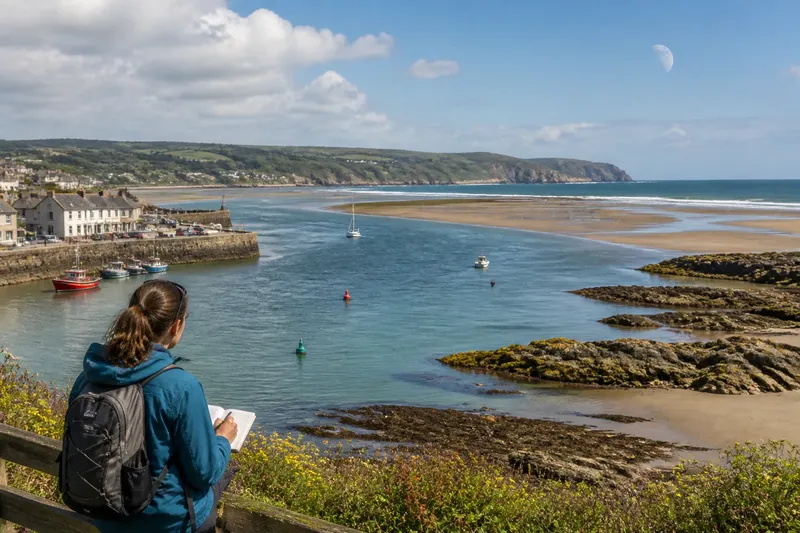
Choose a safe place with a clear view and record observations that another visitor could check: the dominant material, the slope’s outline, and any visible evidence of movement. A pocket notebook works well; a simple sketch can show where the beach, ridge, and cliff meet more clearly than a string of labels.
Keep your description separate from your explanation. “Rounded stones form a high ridge” is an observation. “Waves built the ridge” is an interpretation that may need more context. Local conditions and the source of the sediment matter, so phrase an inference as a possibility unless the evidence is clear.
For a useful record of a dune, cliff or shingle shoreline, include the viewing position and the weather or wave conditions you can observe, without treating one visit as a complete account of coastal change. A later note from the same viewpoint can reveal whether the profile has shifted. Along a busy or unstable coast, stay well back from cliff edges and respect signs and barriers; never approach a slope or wave zone to get a closer look.
The simplest field habit is to name what you can see before explaining how it formed. Sand ridges, exposed faces, and pebble bands each offer a distinct starting point, and careful descriptions make the changing boundaries between them easier to notice.